Showing posts with label WordPress. Show all posts

Friday, March 15, 2019

A Color Facelift

“Color that perfects the skin.” That got my attention. I am always looking for natural beauty practices and products.

The idea that all humans fall into one of 12 color palettes or “tones” fascinated me for other reasons than instant rejuvenation. Coloring is a key piece of Mien Xiang (diagnostic facial diagnosis), which is a critical part of my practice. I also have a love of systems. This drew me to Sci-Art Color Analysis and the pages of Christine Scaman’s blog. She practices in Canada but she referred me to her teacher, Terry Wildfong, in nearby San Jacinto, CA.

A Little Background

The 12 tones are based on the Munsell color system (book available here). It is a research-based system that describes how the human eye responds to color. Our eyes process colors in terms of chroma (soft/bright), temperature (cool/warm), and value (dark/light). There are 12 color families created by variations of these color properties as shown in the diagram below:
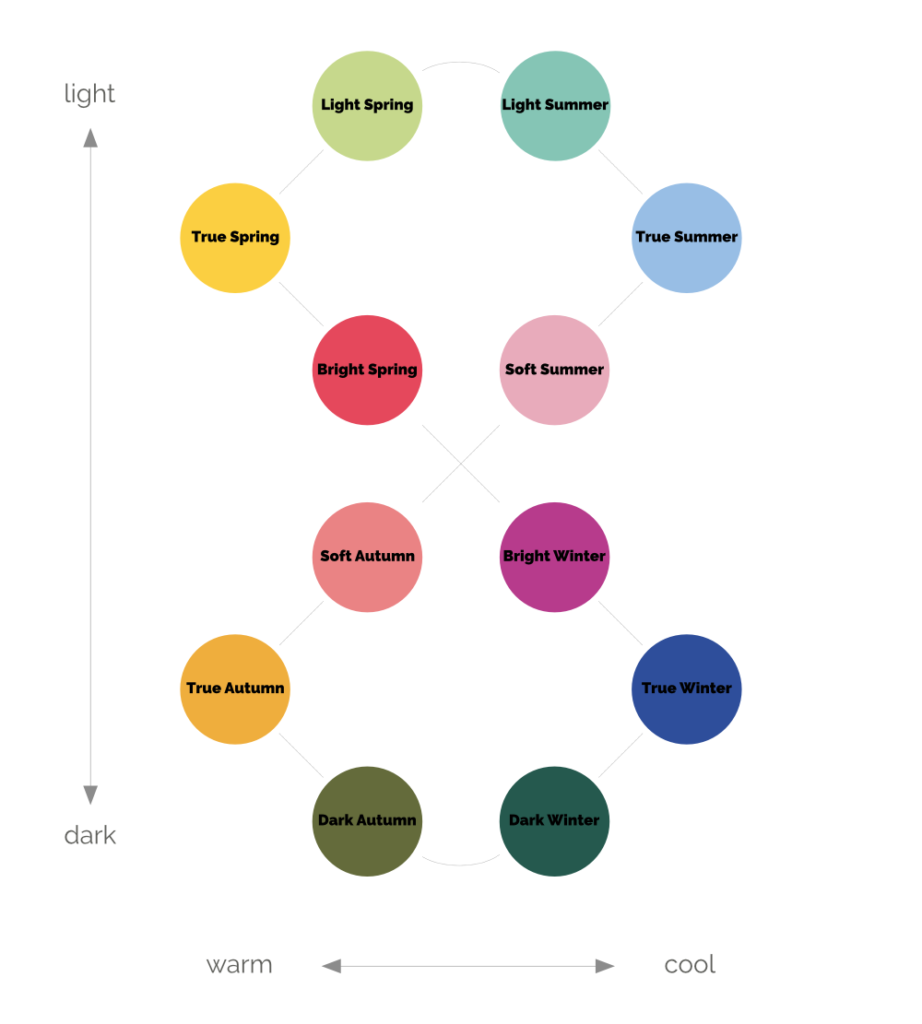
12-tone-chart-value-temperature

Image from elementalcolour.com.au.

When I made the appointment, I was a self-diagnosed True Winter. This was largely prejudiced by my snow white combination of dark hair, pale skin, and blue eyes.

I walked in ready for anything. The analysis room looks like a mini studio with bright lighting, a neutral background, and a large mirror. There was a stand holding endless beautifully colored drapes in every hue and texture. Terry explained color theory to me and how we see colors in relation to one another. The purpose of color analysis is to find harmony between ourselves and the colors we wear.

The Terry began using different drapes to find negative and positive reactions. The drapes are truly magical. Our eyes have trouble seeing how a single color affects us, but when we compare 2 colors, the difference becomes distinct. The facial features actually appear to morph, the skin changes color, we change age, and even our personality appears to shift. In this way, through multiple comparisons of chroma (soft/bright), temperature (cool/warm), and value (dark/light) we arrive at the exact recipe of the undertones of our skin. This not about the hair color, eye color, or the overtones of the skin.
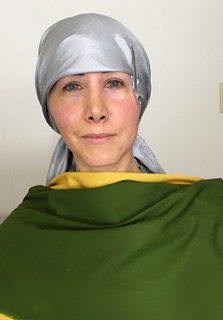
Dark Autumn

Autumn colors combined with the gray headscarf made me look like a long suffering peasant from the set of Anna Karinina.

We quickly ruled out warm and muted (i.e. Autumn). The brightness of Spring (warm and bright) uplifted my features mitigating the fact that the warmth of the colors turned my skin yellow. I was clearly a cool, either a Winter or a Summer. This is where it got tricky, so much so that I came back for a redraping.

Two weeks later I returned. Terry was on a mission. She covered not only my hair, but also my brows, in the lovely gray head covering you see pictured. There would be no distractions. We revisited the 4 finalists, all cool or cool neutral.

The purpose of the test drapes is to cause a reaction in the skin. These will most likely not be your best colors, but they will cause strong, noticeable reactions. In the pictures below you cannot see the dramatic shifts in energy that you see in the studio, but it gives an idea of the process.

True Winter is tested against True Summer. We had gotten stuck between the two during the first draping. I felt like I was in between the two. On Day 2, Winter was the winner.
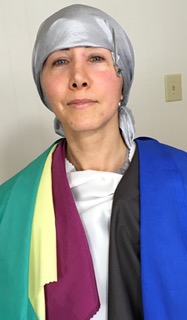
True Summer

True Summer (cool/muted) – The boldest blue greens, fuchsias, and blue violets of the palette were really good, but the neutrals turned my features to mush. My skin became more blotchy. I wasn’t sure if I looked soft and feminine or feeble and near death.
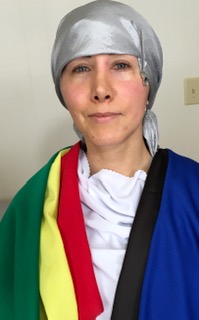
True Winter (cool/saturated) – These colors were starker and colder in person than I had imagined them to be. I couldn’t tell if I looked powerful or harsh. Some of the colors thinned my face, but not in a flattering way. The colors did clear my complexion.
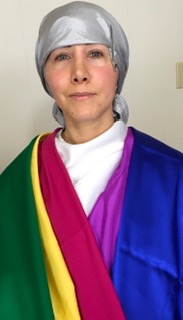
Bright Winter (cool/neutral/bright) – One look at the makeup colors online (shocking pinks and maraschino reds) and I ruled it out, but seeing the drapes in person was a different experience. By far the most flattering neutrals on my skin. I felt the balance of intensity and softness that neither True Winter nor True Summer fulfilled. My skin lifted and became more uniform.
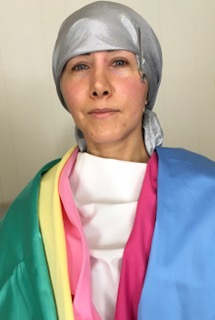
Light Summer (cool/neutral/light) – Bright Winter is tested against Light Summer as they have much in common. My eyes loved the pinks and aquas, but the rest of my face disappeared. Clearly a “no”.

Really, Bright Winter?

I wasn’t ready to allow the Bright Winter lipstick near me. Terry, who at this point in her career is part psychologist, didn’t even try. She knew I was a low to no makeup kind of girl. Instead, she showed me how some of the Light Summer and True Summer cosmetics provided a more gentle effect while still staying in the cool/neutral playground. (Terry carries both Mary Kay and the 12 Blueprints line of makeup in her studio).

Emmy award winning makeup artist (and dear friend) Dale Bach, taught me how to adapt makeup to my features and personality. For me, that means using small, strategic placement of color. I am also inspired by the Korean makeup styles (many of which suite Bright Winter coloring). I can express my Fire in colorful clothes and eccentric accessories, but in makeup I am pure Metal element. I want minimalism and purity that doesn’t distract from me.

Because Bright Winter is cool/neutral, there is a cool to slightly warm spectrum to the palette than can be explored in makeup as I detail below. I found the 12 Blueprints True Summer eyeshadow palette too dusky and muted, but Light Summer worked.
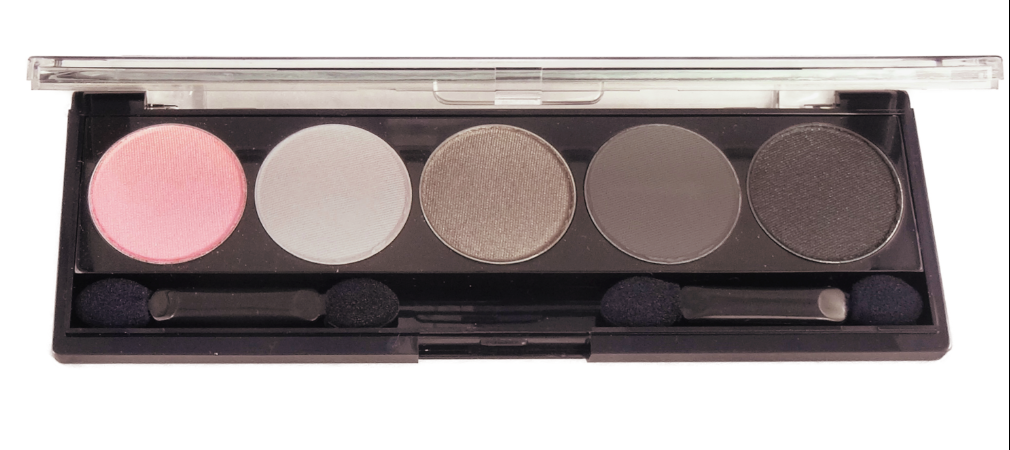
Light Summer Eyeshadow

Light Summer eyeshadow palette from 12 Blueprints – The three taupes on the right work very well on me with an icy lavender highlight like Frees Ya! from Elea Blake. Another option: the champagne highlight from the 12 Blueprints Bright Winter  palette gave a beautiful glow. The two highlights on the left of the above picture didn’t work on my skin.

Blush and Lipstick – Warm side of the palette
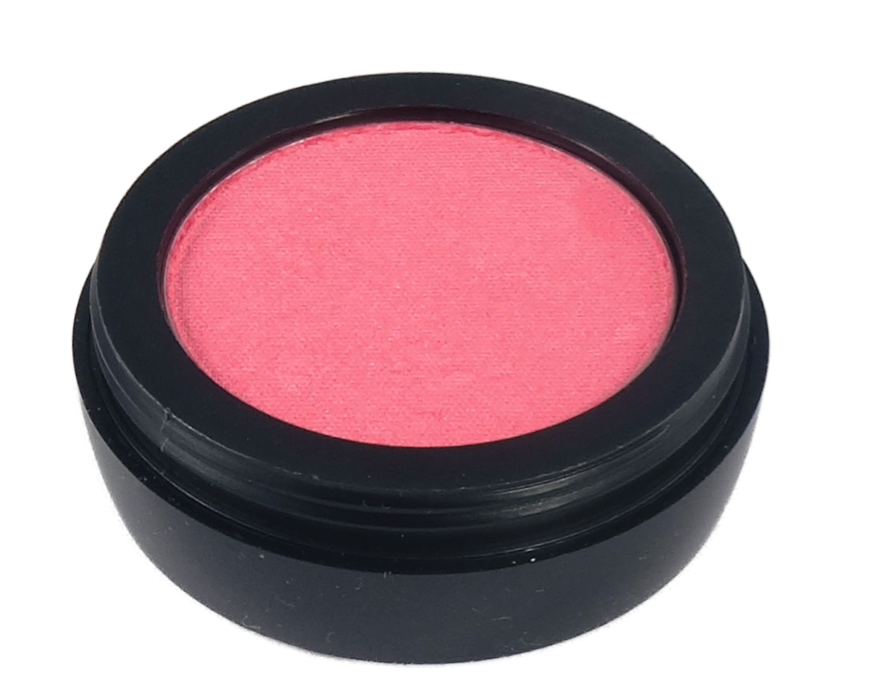
Orchidee Light Summer – 12 Blueprints cosmetics are highly saturated. What I like about this blush is that I can apply as heavily as I want and on my coloring it still looks like a natural glow. It is the strongest of the Light Summer blushes.
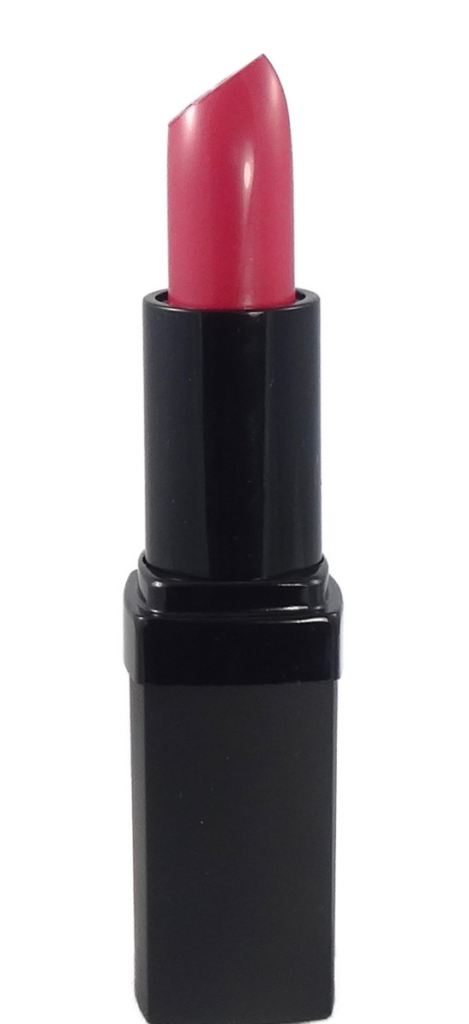
Flowergirl Light Summer

Flowergirl Light Summer – This glossy pink lipstick is very delicate but is great for daytime when I want to look polished but not made up.
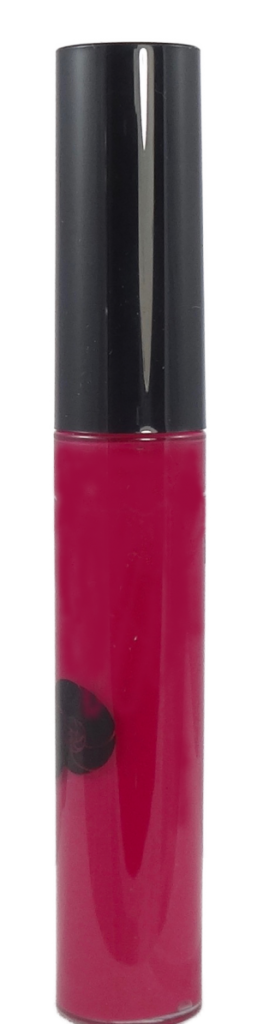
Bijou True Winter

Bijou True Winter – I had purchased this gloss when I thought I was a True Winter. It is like a MLBB shade and goes well with both cool and cool/neutral colors.

Blush and Lipstick – Cool side of the palette
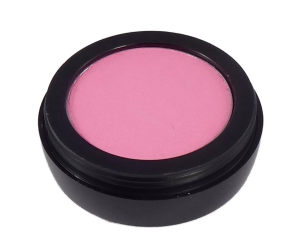
Watered Silk True Summer

Watered Silk True Summer – This is my favorite blush! Perfect for a natural glow.
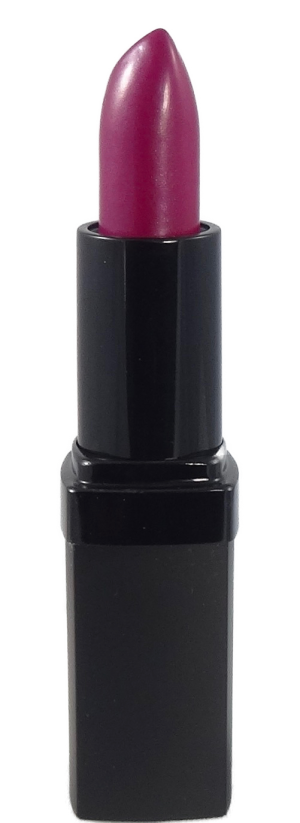
Supreme True Summer – This is where Terry talked me into a real lipstick, though still subtle, it was colorful enough to make my eyes pop.
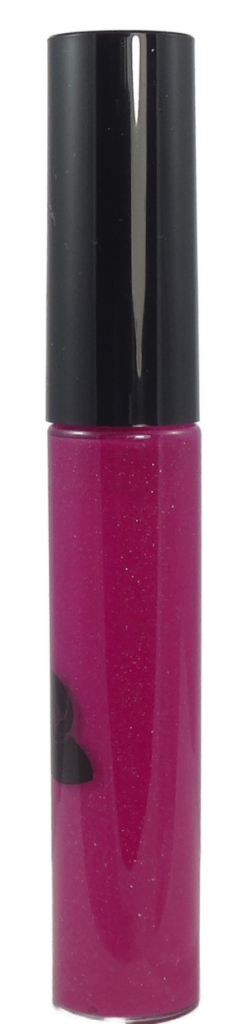
Now or Never True Winter

Now or Never True Winter – This is another gloss I picked up when I was moonlighting as a True Winter. It gives a subtle fuchsia pink effect.


from WordPress https://ift.tt/2F7bxs0
via IFTTT
from Tumblr https://ift.tt/2TFxEzY
via IFTTT

Sunday, September 9, 2018

Wednesday, August 1, 2018

Pulse Diagnosis - Dr. Lia Andrews

PULSE DIAGNOSIS

The heart is a highly tuned instrument that reads electromagnetic waves. Different frequencies are read by the heart as emotions, just as visually they are read as colors. That is how Stephen Harrod Buhner describes it in perhaps the best explanation of the heart’s functioning to a Western audience.

Qi refers to the electromagnetic waves emanating from all life. Every cell in our body has Qi. Every organ system has Qi. Each person, animal, and plant emanates Qi that is the collective resonance of all their cells together.

The heart in Daoist philosophy and Chinese medicine is symbolized by the archetype of the emperor. The brain, and every other organ in the body are subjects of the heart.

When we feel the pulse, we are tapping in directly to all the electromagnetic waves of the body filtered through the heart. We are hearing the emperor speak.

Chinese Pulse Diagnosis

The 6 Pulse Positions

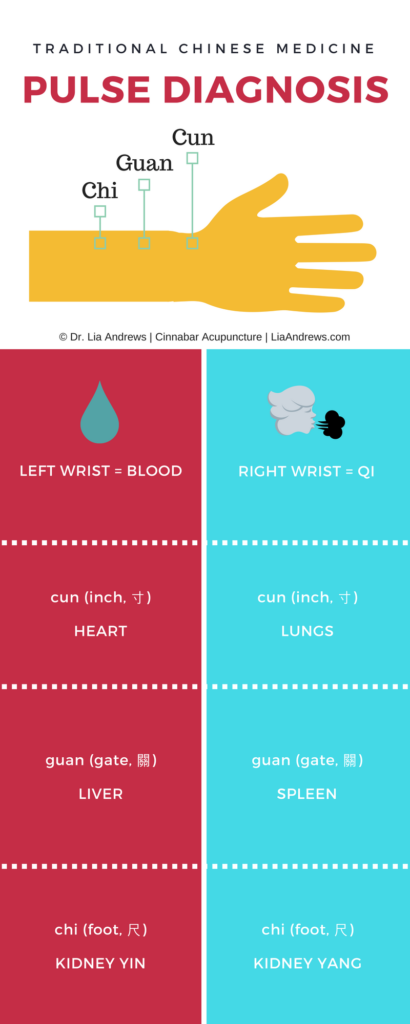
There are 3 pulse positions on each wrist. Each position gives you information on the health of different organ systems. You will want to observe the pulse as a whole, as well as divided into position and depth to give you a complete picture.

How to Find the Pulse

You will use 3 fingers, 1 finger to feel each pulse position. These are your index, middle, and ring fingers. Line up the top crease of your middle finger with the bony part of your wrist closest to your hand. Then wrap your fingers around the wrist. See video here.

The Cun Position

This is the position closest to the wrist felt by your index finger. In a normal pulse it is the most superficial of the 3 positions. On the left it tells you the condition of the heart . On the right of the lungs.

The Guan Position

This is the central position felt by your middle finger. In a normal pulse it is medium in depth. On the left it tells you the condition of the liver. On the right of the spleen and digestion in general.

The Chi Position

This is the position furthest from the wrist a felt by your ring finger. In a normal pulse it is the deepest, but still strong and distinct. On the left it tells you the condition of kidney yin. On the right of kidney yang.

Qualities of the Pulse, and What They Mean

It takes Chinese medicine doctors a lifetime perhaps to master pulse diagnosis, but everyone can understand enough to help guide their own health. There are 29 official pulse types in Traditional Chinese Medicine, with endless combinations. Below I list the pulse types that are most common and relevant.

Normal

A normal pulse (ping mai) is smooth, even and forceful. The pulse is present at the Cun, Guan, and Chi positions and from superficial to deep. Its quality should not change very often or easily. There is a normal variation from person to person.

Depth

Superficial or Floating 浮脉 fú mài

Pulse is strong when barely touch the skin, but disappears with apply deeper pressure.

A superficial pulse most often indicates an exterior pathogen, i.e. the immune system is actively fighting off an invader attacking from the outside. The Defensive Qi of the body builds up at the borders to ward off the attack.

Less commonly deficiency syndromes where Yang Qi floats to the surface.

DEEP 沉脉 chén mài

The pulse can only be felt with stronger pressure.

A deep pulse indicates an interior pattern.

Speed

RAPID or FAST 数脉 shù mài

RAPID = 90 beats/min (5 beats/breath) or more

A rapid pulse pulse indicates Heat.

SLOW 遲脈 迟脉 chí mài

Slow = 60 beats/minute (4 beats per breath) or less

A slow pulse indicates Cold.

Length

LONG 長脉 chǎng mài

Pulse is felt beyond the Cun position.

A long pulse indicates excess liver Yang, excess heat in the interior, or a strong pathogenic invasion.

SHORT 短脉 duān mài

The pulse can be felt at the Guan position but not at the Cun and/or Chi positions.

A short pulse indicates there is not enough Qi to move the blood, either due to Qi stagnation or Qi deficiency.

 Strength

FULL or EXCESS 实脉 shí mài

The pulse is strong and forceful at Cun, Guan, and Chi positions.

A full pulse indicates an excess condition where both the Qi and blood of the body and the pathogen are strong, i.e. a big fight.

EMPTY or DEFICIENT 虚脉 xū mài

The pulse feels weak.

A deficient pulse indicates weakness in the body.

Quality

FINE OR THREADY 细脉 xì mài

The pulse feels fine like a thread but is distinct.

A thready pulse indicates Qi and blood deficiency, or yin deficiency. In yin deficiency, the pulse is typically fast and thready indicating heat + fluid deficiency.

WIRY or STRING-TAUT 弦脉 xuàn mài

The pulse feels tight and long like a guitar string.

A wiry pulse indicates that the liver Qi is not flowing smoothly due to imbalances in the liver and gallbladder organ systems, pain, or phlegm retention.

SLIPPERY or ROLLING 滑脉 huá mài

The pulse feels smooth, flowing, and uninhibited; like pearls rolling in a dish.

A slippery pulse indicates an accumulation of internal pathogenic factors such as phlegm-damp, food stagnation (indigestion), or excess heat. It is considered normal (ping mai) for women during pregnancy.

CHOPPY or ROUGH 涩脉 sè mài

The pulse feels rough and uneven, “like a knife scraping bamboo.” The opposite of a rolling pulse.

A choppy pulse indicates blood not flowing smoothly. This could be due to blood deficiency, blood stagnation, or Jing deficiency.

Beat Regularity

REGULAR IRREGULAR 代脉 dài mài

The pulse is relaxed and weak, stopping at regular intermittent intervals. These intervals may be strikingly long.

A regular irregular pulse indicates trauma or advanced heart disease. This pulse indicates a serious health condition.

KNOTTED (IRREGULAR IRREGULAR) 结脉 jié mài

The pulse is relaxed and slow, stopping at irregular intervals.

A knotted pulse indicates an excess Yin condition: Qi stagnation due to Yin excess, blood stagnation due to phlegm-damp, or blood stagnation. In Western terms , it indicates an irregular beat or palpitation stemming from the ventricle of the heart, but is less serious than a regular irregular pulse.


from WordPress https://ift.tt/2AzMVsW
via IFTTT
from Tumblr https://ift.tt/2LJxseJ
via IFTTT

Monday, January 22, 2018

Chinese New Year 2018 – Year of the Yang Earth Dog - Dr. Lia Andrews

It is Oben’s favorite year in the 12 year cycle of Chinese Astrology; the year of the dog.

General predictions……

Is this a good year for you?

Yes, as long as you position yourself well. Most astrologists would say 1/3 of people are doomed, 1/3 are cautiously lucky, and the rest just get more of the same, but I believe my answer is more Daoist. There is always a way to benefit. It all comes down to the 5 Elements and Yin/Yang.

First, what about the Dog? The 12 animals are a mnemonic (memory) device to remember 5 element/Yin/Yang pairings.

Dog = Yang Earth

it is also a Yang Earth year.

This means a lot of Earth and a lot of Yang energy coming in.

The Good = groundedness, things coming to fruition, loyalty, networking, nurturing

The Bad = stuck, stubborn

Find your 4 Pillar chart or Get a Reading

I am a Water day element – this means I need to be careful with Earth overacting on my water – health take care of my Kidneys. Be careful not to get stuck in my creativity.

Wood controls Earth and also fuels Fire

Metal drains Earth and Fuels Water


from WordPress http://ift.tt/2G7HxM4
via IFTTT
from Tumblr http://ift.tt/2rxrCDB
via IFTTT

Friday, December 29, 2017

Glossary of Terms - Dr. Lia Andrews

This is a glossary of common terms in Traditional Chinese Medicine excerpted from the book, 7 Times a Woman. If you do not see a term you want defined, please see Appendix B in the book.

Acupuncture (针砭, zhēnbiān, or 针刺, zhēncì) – Refers to inserting tiny needles into specific points in the body called acupuncture points. Acupuncture points (also used for acupressure) are places where energy pools along energy pathways. The greater concentrations of Qi (energy) located at acupuncture points make them more powerful locations to move Qi through the entire channel.

Blood (血, xuè) – In Traditional Chinese Medicine contains the Qi and houses the Spirit. Blood is the physical manifestation of Qi and is inseparable from it. Qi gives life to the Blood, while Blood gives Qi physical form. Blood is moistening and lubricates the sinews and tendons and nourishes the skin and hair.

Jing (Essence) (精, jīng) – The product of what is inherited from the parents and what is taken in from the environment (through eating and breathing). It is stored in the Kidneys but also circulates throughout the body. It is influenced by diet, lifestyle, and herbs. It relates to the individual’s constitution which is possible, yet difficult to alter. Kidney Jing guides our maturation, development, and reproduction. It is the slow, fluid movement of the Kidney Jing that is described in the 7 year cycles women experience.

Meridians (经线, jīngxiàn) – The pathways or circuits of energy flow through the body, also called Channels.

Moxibustion (moxa) (艾炷灸, àizhùjiŭ) – A central therapy in Traditional Chinese Medicine, often used with acupuncture during treatment. The leaves of Ai Ye (mugwort) are dried then formed into cones, sticks, or left loose, after which it is called “moxa.” Moxa can be burned directly or indirectly on acupuncture points to warm the meridians and stimulate the flow of Qi.

Qi (气, qì) – Literally translates as “life force energy” or “vital energy.” It is insubstantial. Qi can be felt (and seen by some), but it does not have form. It is what enlivens the body; like electricity that lights up a house. Qi has six functions within the body: transforming, transporting, holding, raising, protecting, and warming.

Shen (神, shén) – The spirit of the Heart and can also be translated as “consciousness.” In TCM, the Heart houses the Mind. It also refers to the overarching spirit of the person. The Heart Shen is the part of a person that is conscious of being and integrates the other spirits of the four other spirits: the Hun, Po, Yi, and Zhi. Imbalance in the Heart causes the Shen to scatter, leading to mental and emotional disturbances.

Traditional Chinese Medicine (TCM) (中医, zhōngyī) – Often used to describe the standardized traditional medicine of China created by post-revolutionary China. It is also used to describe the broader traditional medicine that evolved in China and Taiwan. Some propose using a broader term such as Traditional Asian Medicine to include Japanese, Korean, and other evolutions of the medicine. TCM relies on acupuncture, moxibustion, qigong, herbal medicine, cupping, gua sha, and massage. In Asian countries it also includes bonesetting and chiropractic adjustments.

Yang (阳, yáng) – Relates to the insubstantial, Qi, the sun, heat, movement, excess, rising, morning, back side of the body. Exists only in relation to Yin.

Yin (阴, yīn)– Relates to substantial, Blood and body fluids, the moon, cold, stillness, deficiency, sinking, evening, front side of the body. Exists only in relation to Yang.


from WordPress http://ift.tt/2BTHLEa
via IFTTT
from Tumblr http://ift.tt/2lklDg5
via IFTTT

The Basics of Postpartum Recovery - Dr. Lia Andrews

Postpartum Recovery is a set of practices and nutritional guidelines for the first month after giving birth. It is based on the ancient Chinese practice of Zuo Yue Zi (or “sitting the month”) in which postpartum women and newborns were recovered for 30-40 days after birth with the love and support of extended family. Zuo Yue Zi turned a potentially draining experience into a ritual of rejuvenation. Postpartum traditions such as Zuo Yue Zi existed cross-culturally to protect the health of mother and child. Times have changed and most modern mothers do not have the network of support our ancestors had. Postpartum Recovery is the modern evolution of this tradition, modified to support women now.

What Postpartum Recovery Promises

  • Full Recovery of the Body. Postpartum Recovery brings the waist down to pre-pregnancy shape, prevents organ prolapse (which can cause urinary incontinence), and restores the breasts.
  • Hormonal Balance. By nourishing Qi and Blood and providing adequate rest, a woman’s body is able to fully recover a normal menstrual cycle and healthy hormone production.
  • Boost Health of the Baby. Proper diet and herbs promote top quality breast milk as well as a relaxed, restored mother (two things that will make any baby thrive).
  • Minimal Postpartum Symptoms. Avoid or quickly treat postpartum depression, uterine prolapse, joint pain, mastitis, inadequate milk production, fatigue, and low libido.
  • Increased Fertility. Women are increasingly not recovering hormonal balance after giving birth, reducing their chances to have more children. Postpartum Recovery brings your body back to a pre-pregnancy state, or better.
  • Vitality and Youthfulness. Postpartum Recovery will leave you strong, revitalized, and with plump, glowing skin (no more dark spots).

What Postpartum Recovery Includes

Each woman will want to adapt Postpartum Recovery to meet her needs, however all women need the following for 30-40 days after giving birth:

  • Rest.
  • Nutrition and herbs to properly cleanse and repair the body and promote optimum breast milk production.
  • Connection and support.
  • Abdominal binding.
  • Keeping warm.
  • Avoiding excessive stimulation, stress, or change.

The Stages of Postpartum Recovery

Postpartum Recovery is divided up into three stages.

The first week is Stage 1. During this phase the new mother’s body is at its weakest and most toxic and congested. She has just suffered loss of Qi from delivery as well as Blood and fluid loss. Her body is also trying to expel the lochia (a combination of blood, mucous, and placental tissue discharged through the vagina for 2-4 weeks after birth). Additionally, if she has had a hospital birth, or especially a C-section, her body will also need to clear out medications and anesthesia. Thus Stage 1 has the strictest prohibitions, the greatest rest requirements, and food and herbs that are both nourishing and gently detoxifying.

The second week is Stage 2. The focus shifts to tonifying the Kidneys and contracting the uterus and waist back to pre-pregnancy size. Moving and detoxifying herbs and foods are still used.

The third, fourth, and sometimes fifth week comprise Stage 3. The new mother’s body is cleared enough and strong enough to absorb more intense tonification. She can also enjoy more leniency in her restrictions. This is the time to really build up the vitality of the new mother, and thus her newborn.

Resources

For specific Postpartum Recovery practices please see 7 Times a Woman, and the Postpartum Recovery Manual, coming out Summer 2014. The books are based on my own clinical application on what I learned from the works of Dr. Shuqi Zhuang (庄淑旗) and Dr. Fuqing Zhu, and mentorship from Dr. Shaoting Jing and Dr. Jiang Zheng.

Andrews, Lia. “Partial Translation of ‘Postpartum Recovery Program; a Manual of Rules and Recipes for the Postpartum Woman.’” (DAOM capstone, Pacific College of Oriental Medicine, 2013).

Andrews, Lia. “The ‘Three Golden Opportunities’: Key Times Women Can Improve or Damage their Health.” (The Journal of Chinese Medicine, October 2013, Number 103).

Andrews, Lia. “7 Times a Woman; Ancient Wisdom on Health & Beauty for Every Stage of Your Life.” (Alcyone Press: San Diego, 2013).

Those who can read traditional Chinese characters may want to check out a foundational source of my information. Zhuang, Shuqi. “Postpartum Recovery Program; a Manual of Rules and Recipes for the Postpartum Woman.” (Taiwan: Guang He Chu Ban She, 2005). ISBN 9578807015. Note: you will need to modify this traditional Taiwanese plan for a Western audience.


from WordPress http://ift.tt/2pXdLFR
via IFTTT
from Tumblr http://ift.tt/2ltR4no
via IFTTT

Understand Your Period and Period Care - Dr. Lia Andrews

Menstrual Cycle Overview

Traditional Chinese Medicine (TCM) excels at diagnosing hormonal irregularities and balancing them. Acupuncture and herbs are used to resolve menstrual problems (cramps, PMS, irregularity), infertility, IVF support, and menopausal symptoms. The period cycle itself offers an excellent opportunity to diagnose and address hormonal imbalances.

This basic Basal Body Temperature (BBT) Chart shows an idealized cycle. BBT charts can also be read in TCM terms to assess the health of your cycles. You can make your own BBT chart on paper, using an app like Woman Log, or on a website like Fertility Friend.

It is important for women to be intune with their cycle and modify their lifestyle accordingly. If you are healthy it will help keep you that way. If you have an issue, it will help balance it.

Menstruation

Just before the period, your body temperature drops, indicating the beginning of the Yin phase of your cycle. Menstruation is a time for physical and emotional housecleaning. Old thoughts and hurts are sloughed off with the blood. This is a time to rest and stay warm. Avoid swimming in cold water, cold foods, and exposure to cold drafts. Avoid strenuous exercise or work. This is a time for introspection. Clinically this is the time to move Qi and Blood. Problems during the beginning of this phase indicate Qi and Blood stagnation, while problems at the end of the period indicate Qi and Blood deficiency.

Post-Menses

This is Yin and Blood building period where the new tissue grows in preparation for a potential baby. Activity increases. Make sure to get plenty of nutrients. Clinically this is the time to Nourish Blood and Yin. Symptoms aggravated during this phase often indicate Blood and/or Yin deficiency.

Ovulation

Your body temperature spikes and the body moves into Yang phase. This tends to be the time when you are physically at your strongest. Clinically this is the time to move Qi and Blood and warm the Yang. Problems with ovulation can have numerous causes.

Post-Ovulation

This is the Qi and Yang building period. Clinically this is the time to boost Qi and Yang. Problems during this time can indicate either Qi and/or Yang deficiency, or Liver Qi stagnation.

Menstrual Renewal is a set of practices and nutritional guidelines performed during menses and the days after bleeding has ceased. Practicing Menstrual Renewal will:

  • regulate your menstrual cycle
  • plump up your skin, increase moisture, generate an inner glow, and other signs of high female hormone levels
  • eliminate common PMS symptoms such as cramps, bloating, fatigue, migraines, and moodiness.
  • increase fertility (if desired).
  • reduce chances of gynecological diseases.
  • increase work and athletic performance.
  • regulate weight.
  • keep you looking and feeling young longer.

Every menstruating woman should practice Menstrual Renewal. For details on this practice please see the book 7 Times a Woman.

Andrews, Lia. “The ‘Three Golden Opportunities’: Key Times Women Can Improve or Damage their Health.” (The Journal of Chinese Medicine, October 2013, Number 103).

Andrews, Lia. “7 Times a Woman; Ancient Wisdom on Health & Beauty for Every Stage of Your Life.” (Alcyone Press: San Diego, 2013).


from WordPress http://ift.tt/2EhFXX1
via IFTTT
from Tumblr http://ift.tt/2lk5fvW
via IFTTT

What Does Your Tongue Say About Your Health? Chinese Medical Tongue Diagnosis - Dr. Lia Andrews

Tongue diagnosis is one of many tools acupuncturists use to access the health of patients. Many people have a combination of patterns occurring at the same time, making diagnosis more complicated. First we will look at the tongue body then the tongue coating.

tongue-normalNormal Tongue
A normal tongue is pink, not too big and not too small, with a very thin white coating.

Tongue Body

tongue-juttingJutting Tongue
This tongue to “v” shaped and juts out forcefully. The tension in the tongue is indicative of the tension held in the body. It is a sign of Liver excess (Liver Qi Stagnation or Fire). Possible symptoms include muscle tension, stress, irritability, depression, and PMS. If the tongue veers to one side this indicates Liver Wind and potentially stroke or convulsions.

tongue-puffyPuffy Tongue
Also known as a enlarged or fat tongue. This indicates Phlegm and is a sign of congestion of body fluids. Phlegm is implicated in many modern diseases including sinus or lung congestion, excess weight, irrational thinking, obsessive thoughts, fatigue, foggy thinking, chronic joint pain, high cholesterol, polycystic ovarian syndrome, and channel blockages.

tongue-smallSmall Tongue
A tongue that is smaller than normal indicates a deficiency of substance in the body, namely Blood Deficiency or Yin Deficiency. Common symptoms include anxiety, restlessness, tinnitis, insomnia, night sweats, and female hormone deficiency.

tongue-scallopedScalloped Tongue
Teeth marks on the sides of the tongue indicates Spleen Qi Deficiency. This can present as weak digestion, food allergies, fatigue, poor muscle tone, a tendency to bruise, low immunity, and organ prolapse.

Assessing Tongue Color

tongue-redRed indicates Heat.

tongue-palePallor indicates Cold or Deficiency (Qi, Blood, and/or Yang).

tongue-purplePurple or bluish indicates Blood Stagnation.

tongue-redtipRed Tip The very tip of the tongue corresponds to the Heart. A red tip indicates Heart Heat, or emotional unrest. This can manifest as stress, anxiety, or insomnia. If the tip has a cleft it indicates longstanding or constitutional tendency towards emotional issues.

Tongue Coating

tongue-white-coatThick White Coat
A thick tongue coating indicates Dampness. This is a pathological accumulation of fluids associated with digestive impairment. Common signs include weight gain, abdominal bloating, cloudy urination, mucous in the stools, edema, excessive vaginal discharge, poor digestion, and loose stools.

Thin Yellow Coat
The coating is thin, but distinctly yellow. This indicates Heat, either internal or Wind Heat (pathogenic invasion).

tongue-yellow-coatThick Yellow Coat
The tongue appears heavily coated and yellow. This indicates Damp Heat, the combination of Dampness and Heat (fluid accumulation mixed with inflammation). Commons symptoms include excess weight, feeling hot, anger, Liver/Gallbladder issues, and red weepy skin conditions.

tongue-mirroredScanty or Mirrored Coat
The tongue looks shiny, like liver. This indicates Yin Deficiency and the patient may present with insomnia, anxiety, fatigue, thirst, low back pain, tinnitis, hot flashes, and night sweats.

Common Combination Patterns

tongue-various bigger-words

Enhanced by Zemanta


from WordPress http://ift.tt/2Ehxbs3
via IFTTT
from Tumblr http://ift.tt/2CkiAOx
via IFTTT

How to Heal/Avoid Guru Abuse - Dr. Lia Andrews

“Widows, bulls, slippery steps, and holy men. Avoid these, and liberation awaits.”
Quote from the movie “Water”

My mom, Dr. Judith Andrews, is always saying “you don’t need a guru.” She inherited my grandfather’s skepticism of holy men as swindlers. My years in southern California, a seeming epicenter for gurus, has only affirmed this for me.

As the quote above alludes, people who set themselves up as God’s middlemen have always been an issue. The stories are the same across time, cultures, and religious/spiritual orders. Sexual abuse of minors or adults. Taking money from the hands of the desperate. Narcissistic outbursts. Catholic priests, Megastar pastors, Tibetan monks, your local yoga instructor…. there is no safe place for you to hand over your spiritual power.

Most of us have been cut off from our personal connection to the divine within us at an early age. It can happen even before we are born out of the womb if the environment we incarnate into is too dense. The veil drops and we forget who we really are and our connection to the mystery around us.

This works in society’s favor, or at least societies built on hierarchical control. Having a bunch of self-aware, happy, empowered people around would be worse than trying to herd butterflies.

But one day we catch a glimpse. A hardship or abrupt change breaks through the illusion and we can no longer do things as we did before. We are scared. Like standing at the edge of a high cliff…. and there appears this person so full of confidence.

This person is also so confident in us and our greatness. This is all fine and good. We all need teachers and friends after all. There is one caveat, however, we must depend on this confidence man. We only retain this safe, special place as long as we are with him/her. We may not stray on our own.

This is where the grooming and usual mind control come into play to undermine individual identity and create dependency.

I want to add a less talked about aspect, because it holds the key to your empowerment and freedom from these wayward parasites. Something even more sinister may be happening. In many Eastern, African, and Western occult traditions the spiritual expert actually harnesses spiritual powers and gifts from their followers. The imagery and terms vary from tradition to tradition, but the gist is the same.

We all have a connection to the divine through the heart up to the crown and third eye chakras. The spiritual conman will hijack the inner sight and divert that crown connection to themselves. All the divine gifts and power go to the conman. The follower’s psyche has been rewired. It now makes a B-line to the conman when it tries to access spiritual connection. This is how some spiritual conmen are able to attain special powers. They often make great use of magic tricks.

In traditions across Eurasia that understand the power of sexual energy, conmen (and women) emerged who found it much faster to steal sexual energy from others rather than cultivate it themselves. This is known as sexual vampirism. This misuse and hijacking of the sexual-spiritual axis occurs in dark corners of Daoist, Tantric, and Tibetan Tantric traditions. It was smuggled into secret societies in the U.S. by Aleister Crawley. Rasputin was initiated into a sexual cult in Russia…if you dig a little you will find that some of the darkest aspects of our humanity are tied to this inversion of sexual-spiritual connection. These conmen will be the most hypnotic and powerful.

These most serious cases of spiritual abuse require even more intervention than leaving a cult. Victims need help reclaiming their energy and their gifts. The damage to their personal identity will have been even more profound. All these cases have and can be healed, but it is far easier to get the lesson through someone else’s story and avoid all that time and energy it takes to heal.

The Lesson:
There are no certainties in life. There is no one way. It is best to go ahead and make friends with fear now because it will be there every time you are about to grow in some big and magical way. It means you are on to something. I t means you are about to stretch beyond the familiar.

Make sure your spiritual practice includes learning who you are and loving yourself and others. Illusion cannot stand up to Truth and Love.

If you have been conned, forgive yourself. We all go through vulnerable times and all it takes is for a vulture to swoop in at the right moment. It does not mean you are weak, or stupid, or should feel ashamed. That only keeps you from seeking the support that will heal you.

Spiritual conmen are everywhere, but I give an extra caution to associating with Neo-Tantric groups. This is one of the reasons I felt called to share information on sexuality in a spiritual and health context. We need more people bringing this information out in an empowering way.

The purpose of the guru is to teach you that you don’t need one. You are meant to discover your own divinity and power.


from WordPress http://ift.tt/2ClPZbK
via IFTTT
from Tumblr http://ift.tt/2luD9xw
via IFTTT